
Shopping abroad: how to make sense of EU, UK and US clothing sizes
Shopping abroad: how to make sense of EU, UK and US clothing sizes
Why the same label fits differently from London to Milan, the verified size equivalences, and the one habit that works everywhere: your centimetres.
In brief
EU, UK and US clothing sizes never translate perfectly, because each label reflects a brand's own fit rather than a universal measure. As a starting point, a UK 8 corresponds to a US 4, a French 36, a German 34 and an Italian 40, and a UK 4 shoe to a US 6 and an EU 37. The reliable method is to know your bust, waist and hips in centimetres and compare them with each brand's chart before buying.
The dress fitted perfectly in a London shop. Three months later, in Milan, the same size on another label would not close at the waist, and in a Dubai mall the assistant offered an American number that sounded two sizes smaller. Nothing had changed except the country. For anyone who shops across borders, the size on the tag is less a measurement than a dialect, and learning to translate it saves returns, doubt and a good number of difficult mornings.
Why a size is not a size
There is no single world standard behind the number on a label. In the United States, according to TIME, the Department of Commerce withdrew its commercial standard for women's clothing sizes in 1983, leaving every brand free to define its own. Europe chose the opposite road, at least on paper. The standard EN 13402, as described by the British Standards Institution, labels clothes by the body measurements of the intended wearer, shown with a pictogram, precisely to harmonise sizes for consumers.
In practice, many labels still print the old national numbers, and the result is visible in the data. In a 2026 analysis of the size charts of 15 popular brands, The Pudding found that garments labelled Large were meant for waists anywhere from 29 to 34 inches, roughly 74 to 86 centimetres. That is a gap of nearly 13 centimetres behind the same letter. Each brand designs for the customer it imagines, which is why your size can move one or two steps from one shop to the next while your body stays exactly the same.
The conversion, line by line
Treat any conversion chart as a map, not a promise. The equivalences below come from the international size chart published by the London label Self-Portrait, which sets the systems side by side:
- UK 6 = US 2 = French 34 = German 32 = Italian 38
- UK 8 = US 4 = French 36 = German 34 = Italian 40
- UK 10 = US 6 = French 38 = German 36 = Italian 42
- UK 12 = US 8 = French 40 = German 38 = Italian 44
- UK 14 = US 10 = French 42 = German 40 = Italian 46
Two details matter. First, "EU size" is not one system: a French 38 is a German 36 and an Italian 42, so always check which country a European number refers to. Second, the steps on that chart are regular: the UK number is the US number plus four, and the Italian number is the French one plus four. It is a useful reflex in a fitting room, but only ever a first guess.
A week with your stylist
Every morning, the outfit is ready.
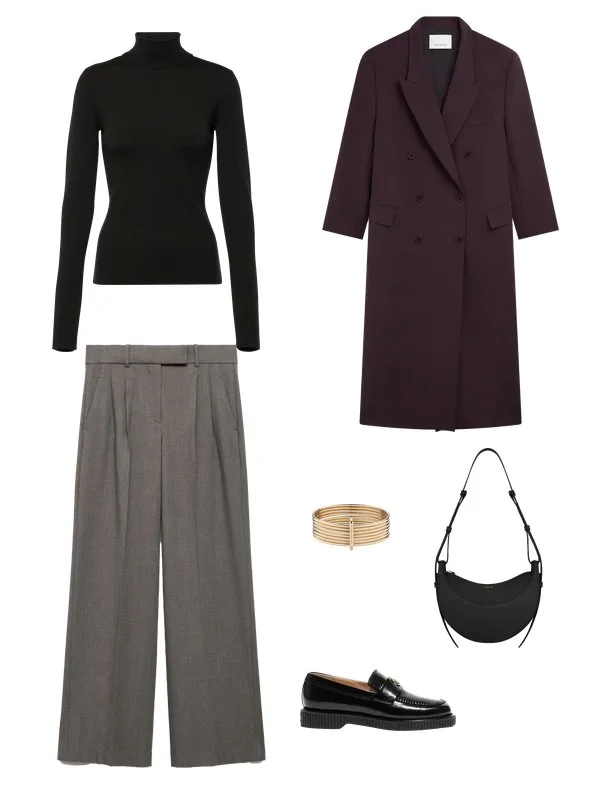
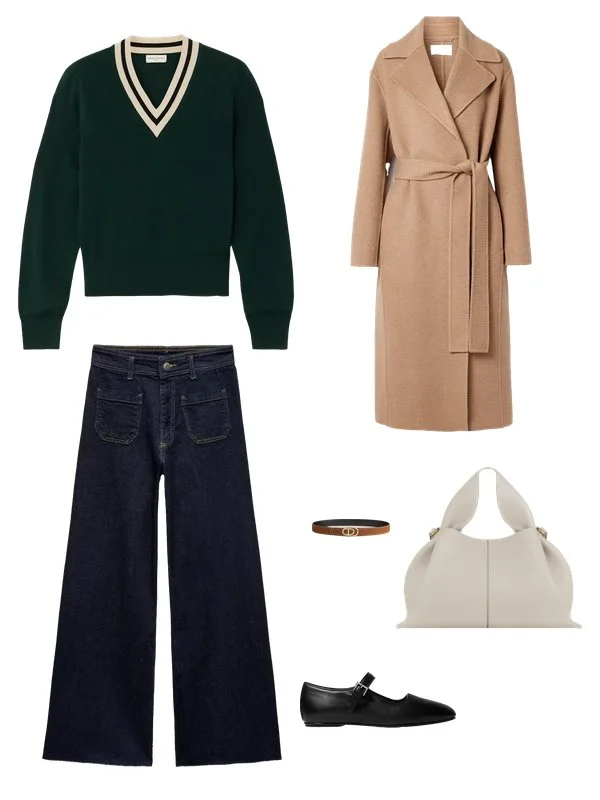
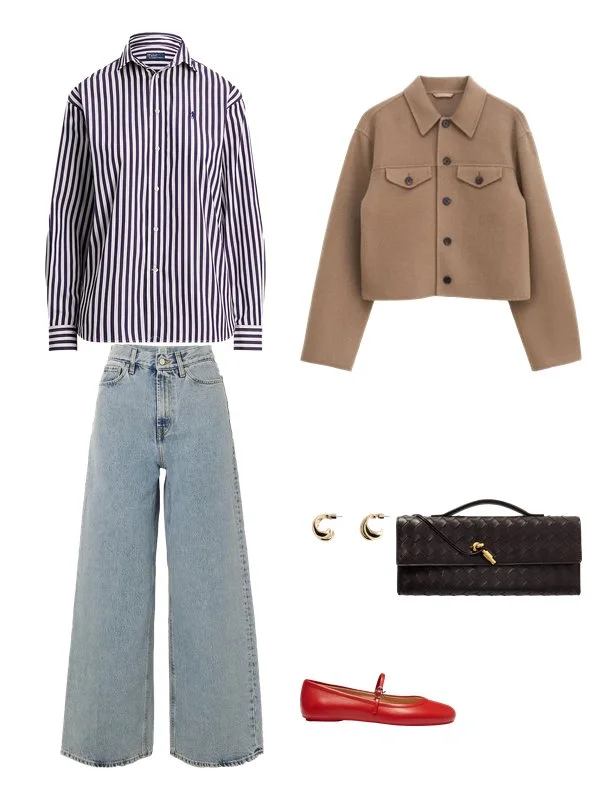
Three mornings, prepared by your stylist.
Get my outfitsShoes, a different arithmetic
Shoes follow their own logic. On the women's size chart of the running brand Saucony, a UK 4 is a US 6 and an EU 37, for a foot length of 22.5 centimetres. The UK and US scales stay two steps apart, but European sizes do not move in neat half steps: on the same chart, a US 5.5 becomes an EU 36 and a US 6.5 an EU 37.5.
The calmest reference, once again, is a measurement. The international standard ISO 9407, known as Mondopoint, sizes footwear by the length of the foot in millimetres. Measure each foot standing, with your weight on it and your heel against a wall, keep the longer figure, and compare it with the brand's chart rather than with the number you usually ask for.
Your centimetres travel with you
If one habit replaces every chart, it is this one: know your body in centimetres. Three measurements cover most clothing. Bust, around the fullest part with your arms relaxed; waist, at the narrowest point; hips, around the fullest part with your feet together. Add your inside leg for trousers, note everything in your phone and update it each season.
Then read the brand's own chart, not the letter. When your measurements fall between two sizes, the cut decides: a structured blazer is chosen by the shoulders and bust, a straight trouser by the hips, a wrap dress forgives far more. Our free tool Body shape and sizes gathers the conversions and your measurements in one place, handy to keep open in another tab while you browse.
Reading a brand like a local
Every label has a personality, and the women who shop well abroad learn it. Check where the brand is based: its home system is the one its pattern makers think in, and the conversion is where errors creep in. When a garment's own measurements are published, read them too, to see how much ease is built in. Look at the fabric as well: a stretch knit tolerates the smaller size, a rigid denim or a silk does not.
Keep a short note of the brands that fit you, with the size that worked and the country of the label, because that list soon becomes more precise than any table. It is also, quietly, the work a stylist does when she chooses pieces for someone else.
The dress in Milan was never the wrong size. It was simply written in another language. Once your centimetres become the reference, every label, British, American, French or Italian, turns back into what it should be: a translation you can check in a few seconds.
FAQ
Is EU sizing the same in every European country?
No. On the conversion chart cited above, a French 38 corresponds to a German 36 and an Italian 42. Always check which country a European size refers to, then compare with the brand's measurements in centimetres.
What is a UK 10 in US and Italian sizes?
On the same chart, a UK 10 is a US 6, a French 38, a German 36 and an Italian 42. Use it as a starting point, then check the brand's own size guide.
How do I convert shoe sizes between the UK, the US and Europe?
On the chart cited above, a UK 4 corresponds to a US 6 and an EU 37, for a foot length of 22.5 centimetres. European steps are irregular, so measure your foot in millimetres and compare it with each brand's chart.
The Atelier Faubourg styling team
Each month, our stylists compose your outfit plan from your answers, your sizes and your real life.
You may also like
Life abroad
Going Home for the Holidays: One Suitcase, Two Seasons
Flying from the Gulf heat to a European winter, or back again? How to dress for the plane and pack one suitcase that works in both climates.

Life abroad
Dressing for the office in Dubai: what the dress code really means
Shoulders, knees, heat outside and cold air conditioning inside: what office dress in Dubai really asks of you, and how to build a wardrobe that works.

Life abroad
Where to Shop When Brands Don't Ship to Your Country
Your favourite brand does not deliver to where you live now. The fix is a method, not a miracle: shop the cut, not the label.