
Why You Have Nothing to Wear (And What It's Actually Costing You)
A full wardrobe and nothing to wear is not a shopping problem. It is a decision problem, and it has a measurable price.
En bref
The short answer: you own enough clothes. What is missing is not fabric, it is decisions. A wardrobe stores pieces; a morning demands an outfit. "Nothing to wear" is the sound of the gap between the two, and that gap has a real price, in time, in money, and in how you walk out the door.
The scene everyone knows
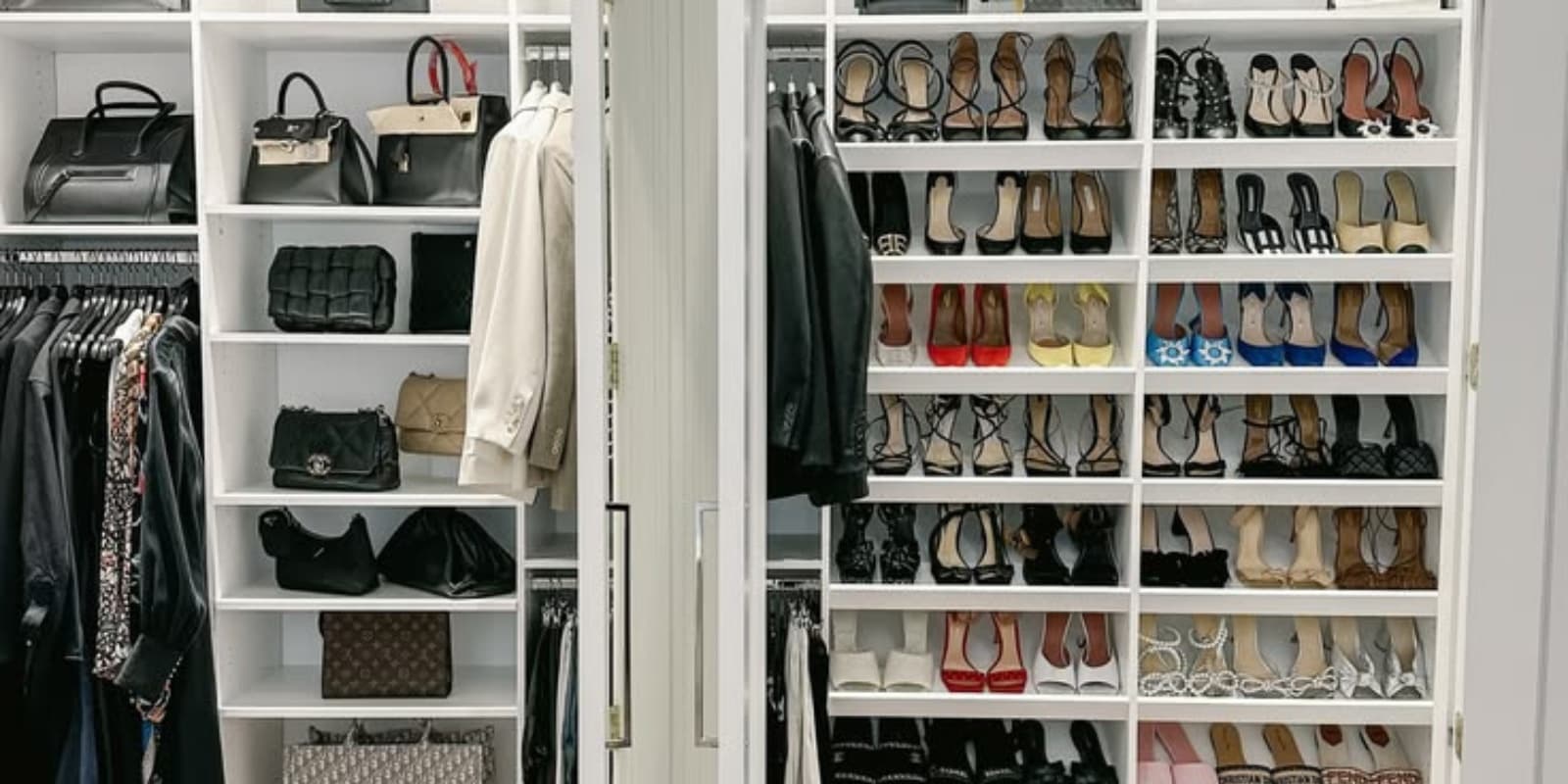
Eight in the morning. The wardrobe is full, verifiably full, and you stand in front of it feeling strangely underequipped. You try one combination, doubt it, take it off, and land on the same outfit you wore on Tuesday. Nothing dramatic has happened. The feeling is real, though, and it deserves a better explanation than "I need to go shopping."
What is actually happening
The brain does not store outfits. It stores pieces. You can picture your navy trousers with perfect clarity, and your cream knit, and your good white shirt. What the brain will not do at eight in the morning, under time pressure, is run through the hundreds of combinations those pieces allow and judge which ones hold together. Combining is a design task, and design needs calm. A weekday morning is the single worst moment your week offers for design work.
So the wardrobe is not empty. It is unresolved.
What it costs, in numbers you can check
Start with time, because you can count it yourself. Ten minutes of hesitation on a work morning is a modest estimate. Five mornings a week, roughly forty-eight weeks a year: that is forty hours. A full working week, every year, spent standing in front of your own clothes.
The money is worse, because it hides. The reflex answer to "nothing to wear" is to buy something, usually quickly, usually under pressure, sometimes an hour before the dinner it was bought for. A piece bought as an escape rarely fits the wardrobe it lands in, because nothing in that wardrobe was chosen with it in mind. It gets worn once, maybe twice. The real waste in a wardrobe is never the expensive piece. It is the unworn one, at any price.
La garde-robe capsule, expliquée par nos stylistes.
Découvrir le guideWhy buying more makes it worse
Every new piece adds possible combinations. But combinations were never the shortage; decisions were. Thirty pieces already offer more outfits than a month can use. Sixty pieces offer more still, and the morning maths gets harder, not easier. More options facing the same deciding capacity simply means more noise. This is why a wardrobe can grow for years while the feeling in front of it stays exactly the same.
What actually solves it
Deciding once, calmly, ahead of time. An outfit chosen on a quiet afternoon, with the whole wardrobe in view and no clock running, is a better outfit than anything assembled in a rush, and it costs nothing on the day it is worn. You put it on and think about your morning instead.
That is the entire logic behind a monthly outfit plan. Thirty looks, decided in advance, matched to the month you are actually living: work days, dinners, travel, the odd day when comfort wins. It is, transparently, what our stylists build for our clients from a short style quiz. But the principle works at any scale. Even five pre-decided outfits, photographed and pinned inside the wardrobe door, change the texture of a Monday.
Not a new you
None of this is about becoming someone else, and it should never feel like homework. It is about refusing to start from zero every single morning. The clothes were never the problem. The eight a.m. design meeting was. Cancel it.
FAQ
Does a capsule wardrobe fix "nothing to wear"?
It helps, and it is not enough on its own. A small wardrobe with no decided outfits still asks you to design under pressure, just with fewer parts. Fewer pieces plus pre-combined outfits is the pairing that works.
How many outfits does a month actually need?
Fewer than it seems. Around thirty covers a normal month, and repeats are not a failure; a good outfit deserves its second and third life. What matters is that each morning has an answer waiting.
Is it worth planning with the clothes I already own?
Yes, and it is the best place to start. Pre-deciding is not a shopping method, it is a deciding method. Most full wardrobes contain a month of good outfits that have simply never been introduced to each other.
L’équipe de stylisme Atelier Faubourg
Chaque mois, nos stylistes composent votre planning de tenues à partir de votre profil de style, de vos tailles et de votre vraie vie.
Vous aimerez aussi
Conseils Style
S'habiller après un déménagement : ce qu'on ne vous dit jamais sur la garde-robe d'expatriée
Une garde-robe construite dans un pays survit rarement au passage dans un autre. Et le problème, presque toujours, n'est pas la météo.

Conseils Style
La capsule de fin d'été : 12 pièces pour finir la saison en beauté
Il reste à l'été de belles semaines. Voici les douze pièces à porter jusqu'au bout de la saison, choisies avec un œil de styliste.